Dead Son Rising / Dead Moon Falling / Big Noise Transmission (Live) 4CD + Coloured Double Vinyl
Dead Son Rising / Dead Moon Falling / Big Noise Transmission (Live) 4CD + Coloured Double Vinyl
05/9/26
Dead Son Rising (2011) is the sixteenth solo studio album by Gary Numan, co-written and co-...
Dead Son Rising / Dead Moon Falling / Big Noise Transmission (Live) 4CD + Coloured Double Vinyl
05/9/26
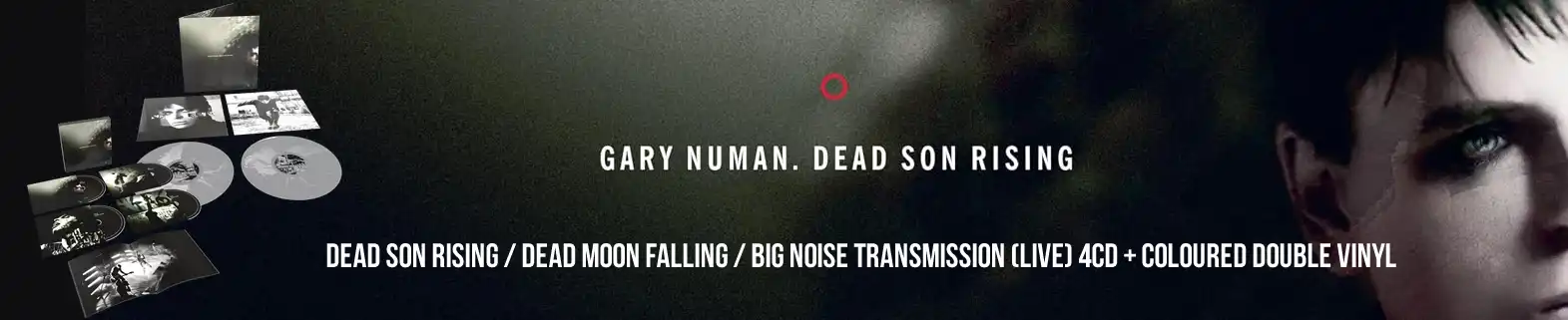
Dead Son Rising (2011) is the sixteenth solo studio album by Gary Numan, co-written and co-produced by Numan and his long-time collaborator, Ade Fenton. The album is widely considered by critics and fans to be one his strongest, most cohesive and atmospheric releases of the 21st Century.
The concept of the record grew out of a set of demos Numan recorded for previous projects but hadn’t released. Explaining how the album took shape he explained: “The original ideas that sparked off these songs are now barely visible. It grew into another animal, something more experimental.”
Heavy, dark and deeply cinematic, Dead Son Rising is a blend of industrial rock and electronic goth synth. Because of its powerful synth lines, distorted guitars and claustrophobic production, critics compared the album to Nine Inch Nails (a band Numan famously influenced). Many of the tracks are deeply personal, exploring troubled relationships and emotional betrayal. However, songs like ‘We Are The Lost’ and the title track ‘Dead Sun Rising’ pull from a sci-fi fantasy novel Numan was writing at the time.
Dead Moon Falling (2012) is the companion remix album to Dead Son Rising, with mixes curated by Numan and Fenton, featuring a diverse array of artists including Tim Burgess (Charlatans), Alec Empire (Atari Teenage Riot), Gazelle Twin and Sonoio (NIN).
CD1
01. Resurrection
02. Big Noise Transmission
03. Dead Sun Rising
04. When The Sky Bleeds, He Will Come
05. For The Rest Of My Life
06. Not The Love We Dream Of
07. The Fall
08. We Are The Lost
09. For The Rest Of My Life (reprise)
10. Into Battle
11. Not The Love We Dream Of (piano Version)
Bonus Tracks
12. The Fall (ade Fenton Remix)*
13. The Fall (motor Alternative Mix)
14. The Fall (south Central Bad Trip Mix)
15. The Fall (motor Club Mix)
* Previously Unreleased
CD2 – Dead Moon Falling
00.1 Big Noise Transmission (tim Burgess Remix)
00.2 Dead Sun Rising (sonoio Remix)
00.3 We Are The Lost (gazelle Twin Remix)
00.4 When The Sky Bleeds, He Will Come (tweaker Ray Remix)
00.5 Not The Love We Dream Of (toby Butler / The Duke Spirit Remix)
00.6 The Fall (the Officers Remix)
00.7 For The Rest Of My Life (alec Empire Remix)
00.8 For The Rest Of My Life - Reprise (is Tropical Remix)
00.9 Dead Sun Rising (grayed Out Mix)
0.10 For You (feat. Andy Gray)
0.11 Petals (feat. Officers)
CD3 - Big Noise Transmission (live) Part I
01. Resurrection
02. Down In The Park
03. The Fall
04. Haunted
05. When The Sky Bleeds, He Will Come
06. Films
07. Big Noise Transmission
08. Pure
09. Dead Sun Rising
10. Everyday I Die
CD4 - Big Noise Transmission (live) Part Ii
01. We Are The Lost
02. Absolution
03. For The Rest Of My Life
04. Noise Noise
05. Everything Comes Down To This
06. Jagged
07. I Die: You Die
08. Cars
09. My Shadow In Vain
10. Are 'friends' Electric?
recorded At The Ritz, Manchester, December 08 2011.
LP1
A1. Resurrection
A2. Big Noise Transmission
A3. Dead Sun Rising
A4. When The Sky Bleeds, He Will Come
A5. For The Rest Of My Life
B1. Not The Love We Dream Of
B2. The Fall
B3. We Are The Lost
B4. For The Rest Of My Life (reprise)
B5. Into Battle
LP2
C1. Big Noise Transmission (tim Burgess Remix)
C2. Dead Sun Rising (sonoio Remix)
C3. We Are The Lost (gazelle Twin Remix)
C4. When The Sky Bleeds, He Will Come (tweaker Ray Remix)
C5. Not The Love We Dream Of (toby Butler / The Duke Spirit Remix)
D1. The Fall (the Officers Remix)
D2. For The Rest Of My Life (alec Empire Remix)
D3. For The Rest Of My Life - Reprise (is Tropical Remix)
D4. Dead Sun Rising (grayed Out Mix)
This multi buy includes:
Dead Son Rising / Dead Moon Falling / Big Noise Transmission (Live) CD
Dead Son Rising / Dead Moon Falling Coloured Double Vinyl
£55.00
CDs only
Discs: 4 £23.99
Double Vinyl only
2xLP £37.00
More details here.